The QKD Network Germany–Poland–Czechia project was launched in March 2026, aiming to create a secure, attack resilient quantum communication infrastructure (QCI) connecting three countries in our region. The project aims to create the first large-scale international network of its kind in Central Europe to employ Quantum Key Distribution (QKD), a method of generating and sharing cryptographic keys that remains secure even in the face of future quantum computing threats.
News
Events and interesting facts from the life of the Institute
All: 113

OPI PIB’s Maciej Kazuła ranks 3rd in a Sphere Online Judge ranking
Maciej Kazuła, an MLOps engineer at the National Information Processing Institute, placed third in the GRIDPNT task ranking on the Sphere Online Judge (SPOJ) platform. The challenge required participants to analyse points in the Cartesian grid and identify the next point that satisfied a set of predefined geometric conditions relative to the origin of the coordinate system.

Merry Christmas and a Happy New Year!
We wish you a Christmas of joy, peace, and beauty. May it bring you serenity, rest, and spiritual renewal.

What does the future hold for dropouts? The latest ELA data is here
Student dropout, or resigning from studies before graduation, is a widespread phenomenon in Poland and globally. Universities have been working for years to reduce dropout rates with support from the Polish Ministry of Science and Higher Education. On behalf of the Ministry, experts from the National Information Processing Institute (OPI PIB) have released the latest autumn edition of the Polish Graduate Tracking System (ELA), presenting data on the mobility and professional activity of dropouts across all Polish provinces. The data clearly demonstrates that failing to complete a degree leads to economic setbacks.

Digital Transformation Leaders Award for the PLLuM project
PLLuM receives the ‘Nationwide Solution’ award at the Digital Transformation Leaders Gala.

Gender equality in science: Europe’s declarations fall short of action
Data collected by a cutting-edge dashboard designed by the National Information Processing Institute (OPI PIB) to measure gender equality in science suggests that many countries face challenges in turning their commitments into reality.

Legal frameworks for digital transformation and artificial intelligence
The ongoing digital transformation and the rapid growth of artificial intelligence (AI) are influencing societies, economies, and legal systems profoundly across the world. Central to the contemporary debate are questions on achieving a balance between innovation, individual rights, and collective responsibility. Above all, it remains essential that humans, not machines, stay in control of decision-making processes.
Data safety management: Insights of the OPI PIB Head at the Economic Forum in Karpacz
Secure data management is one of the key challenges for business and research today. This September, Dr hab Jarosław Protasiewicz, the Head of OPI PIB, will join the The new currency: how to manage data safely? panel at the Economic Forum in Karpacz to share his insights.
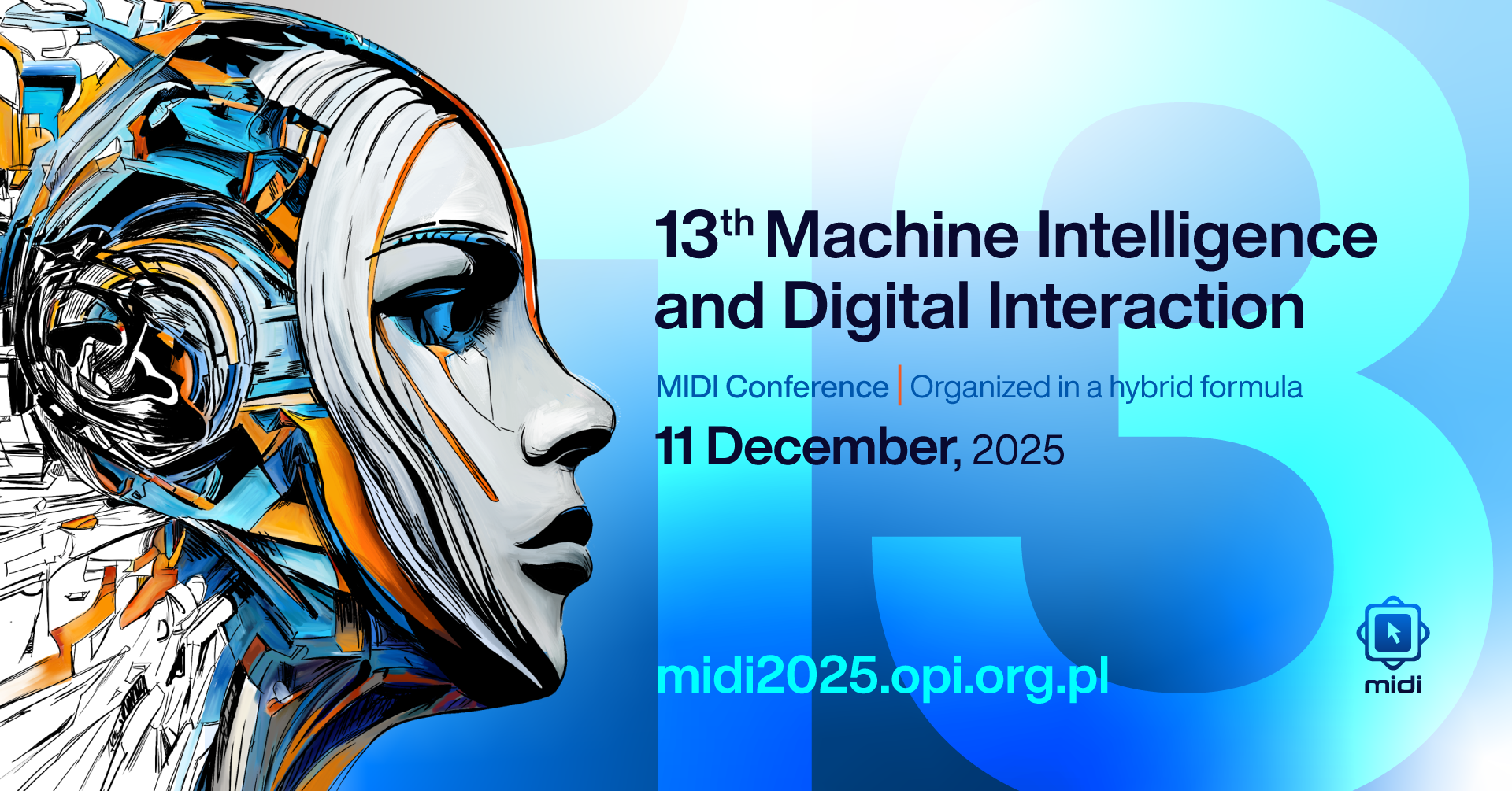
#MIDI 2025 Conference: submit your abstracts by 5 October
Join researchers, scientists and experts on 11 December, 2025 at the 13th Machine Intelligence and Digital Interaction (MIDI) conference. Submit your abstracts by 5 October, 2025.
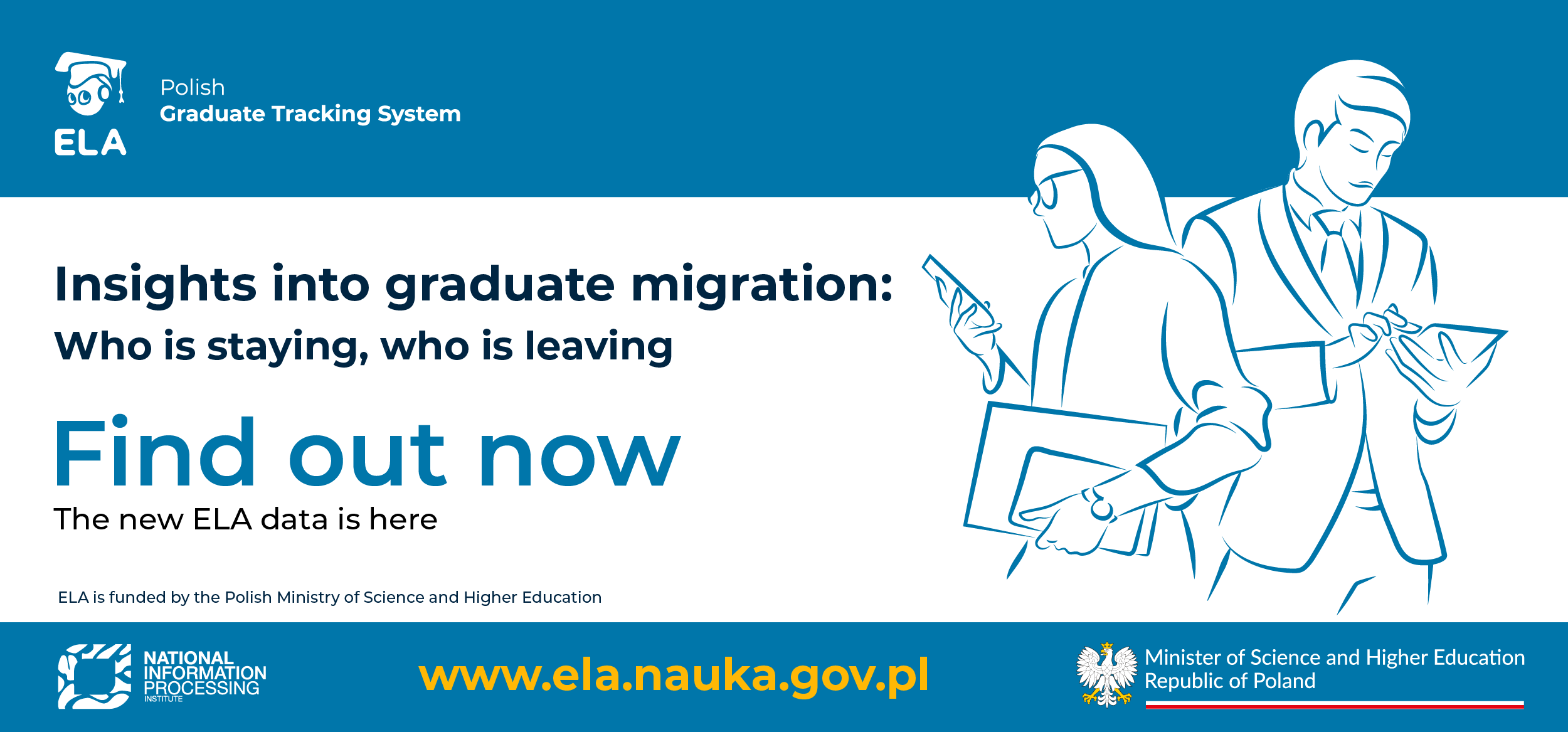
Who is staying, who is leaving: insights into graduate migration. The latest ELA data is here
People who are considering what to study can now explore the 10th edition of the Polish Graduate Tracking System (ELA), released by the Polish Ministry of Science and Higher Education (MNiSW) in collaboration with OPI PIB. The updated data helps users to determine which university subjects are among the most lucrative in the five years following graduation and how long it takes to find a job with degrees in those subjects. In 2025, new indicators have been added to the system to reflect the economic circumstances of graduates by the province of their graduation.